Courage and Consequence – The Japanese Schindler Who Wrote Visas Until the Train Left

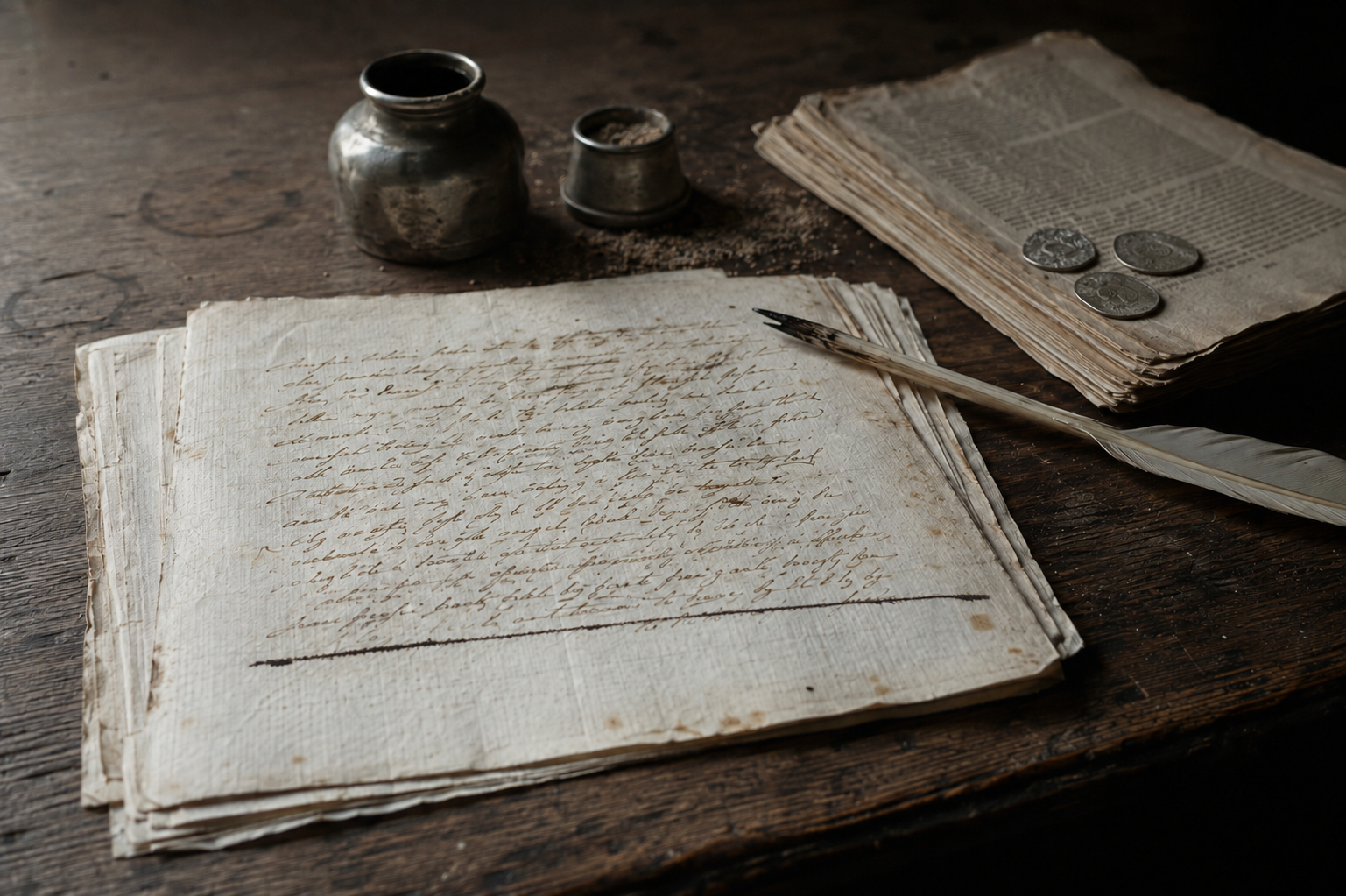
Two armies closing in. A government that said no. Three cables to Tokyo, three refusals. A crowd of refugees at his gate every morning, mothers holding children, men gripping the fence. Chiune Sugihara was a Japanese vice-consul with orders to stay out of it. He picked up a pen instead. For a month he hand-wrote transit visas eighteen hours a day, and when the train carrying him away began to move, he was still throwing them through the window. The officials who ordered him to stop are forgotten. The ministry that ended his career is a footnote. Sugihara sold light bulbs for decades while the people he saved searched the world to thank him. One man, one pen, more than six thousand lives. Chiune Sugihara needs to be remembered.

Read More…

Courage and Consequence – The Only Black War Correspondent Writing for a Major Daily

Thomas Morris Chester took the one war-correspondent job in America that could get the reporter shot or sold into slavery. He accepted it without hesitation. The son of a fugitive slave, he became the only Black reporter for any major daily in the Civil War, embedded with the United States Colored Troops. For nearly a year he wrote the truth about Black soldiers — their valor, their dead, the atrocities against them — and on the day after Richmond fell he sat in the Confederate Speaker’s chair and knocked down the Rebel who ordered him out. He carried a pencil where his skin could kill him, and he never stopped writing. Thomas Morris Chester needs to be remembered.

Read More…

The Eight Critical Skills: Where You Actually Learn Them

Thirty years ago, I built a list of eight critical skills—not from a survey, but from nearly a thousand executive searches where companies told me what they’d pay real money to find. The skills held. The world they were built for did not.
AI changed everything underneath them. It drafts your memo, builds your analysis, and hands it back polished, confident, and sometimes completely wrong—then defends the falsehood to your face. I’ll show you the studies, with exact numbers, where experts trusted the machine and followed it off the edge.
The eight skills still hold. AI has only sharpened their edge—and raised the price of getting them wrong.
The machine produces. It cannot judge. That part stays with you.
You do not learn a critical skill by reading about it. You learn it by practicing it — and that was always the part worth having.

Read More…

Courage and Consequence – The Congressional Medal of Honor and the Geometry of Mercy

A wounded man on the road. The enemy’s uniform on his back. A field of fire no order required anyone to cross. The easy thing, the sanctioned thing, was to leave him where he lay and let the war finish him. On May 2, 1863, in the burning woods of Chancellorsville, Private William Wallace Cranston and three men of the 66th Ohio laid down their rifles, took up two blankets, and walked into the fire to bring him out alive. They went for mercy. The intelligence the grateful man then gave Union commanders was the unasked-for gift on top of it. The medal took thirty years to arrive. The story took longer, and survives mostly because a family refused to let it go. He proved that the rarest courage is spent not on the enemy but for him. William Wallace Cranston needs to be remembered.

Read More…

The Girl Beneath the Banner – A Front-Row Seat to the Moment Lincoln Made Slavery a Question of Conscience

She stood three feet from Lincoln and lived to measure the afternoon against everything it foretold.
A rare eyewitness account of the 1858 Galesburg debate, written from the crowd rather than the platform.
Josephine Park Cranston, a Lombard student, conceived and helped stitch a banner naming Lincoln “The Champion of Liberty,” then stood three feet from him as it was presented.
An 1866 assessment judged her fit to be a civil engineer or architect — “so unfortunate as to be a woman after our society.” The hand that could have built bridges was permitted only to sew a flag for liberty.
The banner survives — painted on silk in the Kansas Museum of History. She understood the cause she served better than most, because she lived on the wrong side of its logic.
Thank you, Aunt Jo!

Read More…