
The injection that lifted a death sentence, and had to be given again the next day
The first injection did almost nothing.
On January 11, 1922, in a ward of the Toronto General Hospital, a doctor put a needle into a boy named Leonard Thompson and gave him an extract of cattle pancreas. His blood sugar came down a little. The acid building in his blood stayed where it was. An abscess rose where the needle had gone in. In the ward notes it went down as Macleod’s serum.
Thompson had been admitted on the second of December, weighing sixty-five pounds. By early January he was on a diet of 450 calories a day and close to death. The doctors waited twelve days, and then they tried again.
For a child in 1921, diabetes ran one course.
It began with thirst. The child drank and drank, and wet the bed, and grew thin while eating. The body could not use its sugar, so it burned fat and muscle instead, and the burning made acids, and the acids brought on the coma. A family doctor could name the disease in an afternoon. He could do very little else.
What medicine had was hunger. Frederick Allen’s regimen held diabetics near starvation on the theory that it spared the failing body, and the diets that carried his name cut food to the bone and kept it there. At best they postponed death, sometimes by months, sometimes by a year or two. Banting himself put the life expectancy of a diabetic child before 1922 at a matter of months.
The price of those months was paid at the kitchen table. Parents weighed out every meal. Children who were already wasting were given less. Elizabeth Hughes, the daughter of the American Secretary of State, was held at the worst of it to three hundred calories a day. When she reached Toronto in 1922 she weighed forty-five pounds and could barely walk on her own.
The doctors who ran those diets were doing the best that medicine then had. The diet kept a child alive long enough, sometimes, to see the next idea arrive.
On October 31, 1920, Frederick Banting, a surgeon struggling to build a practice in London, Ontario, woke at two in the morning and wrote a note to himself. Tie off the pancreatic ducts of a dog. Keep the dog alive until the digestive tissue withers. Try to isolate the internal secretion of what is left. He had never done research. His idea was not entirely new, and its central premise would turn out to be wrong.
Others had been chasing the same substance for thirty years. In 1889 two German scientists removed the pancreas from dogs and produced diabetes. A Berlin physician, Georg Zuelzer, filed a patent on a pancreatic extract in 1908. In Bucharest, Nicolas Paulescu published a series of experiments with his own extract in 1921. They had all come close. Their extracts were too toxic or too weak to use safely. By 1921, newer methods of measuring blood sugar would give the Toronto team a far closer view of what an extract was doing than most of their predecessors had had.
Banting took his note to John Macleod, professor of physiology at the University of Toronto and an authority on how the body handles sugar. Macleod was wary of him. He gave Banting a laboratory anyway, a supply of dogs, and a student assistant named Charles Best. In the summer of 1921, while the two young men worked through the heat, Macleod went home to Scotland.
They went through a great many dogs. By August they had an extract that lowered the blood sugar of a dog whose pancreas had been cut out. By December they had learned they did not need the withered glands at all. Fetal calf pancreas from the slaughterhouse worked. Then fresh adult pancreas worked too. The duct-tying that started everything had been unnecessary, a fact the two of them were slow to accept.
In mid-December Macleod put a young biochemist on the problem. James Collip, on leave from the University of Alberta, knew how to clean up a tissue extract. He worked the alcohol method step by step, raising the concentration so that the impurities fell out first and then, at a higher strength, the active substance itself could be drawn off. It was Collip’s extract that Leonard Thompson received on January 23.
His blood sugar fell by about three quarters. The sugar and the ketones nearly disappeared from his urine. The clinical notes record the rest in one plain line: “the boy became brighter, more active, looked better and said he felt stronger.”
He would need it again the next day, and the day after that.
Then the method broke down. Through the spring of 1922 the team tried to make the extract in quantity, and it would not purify at scale. Between March and May no potent insulin was made at all, though the first results had already gone into print.
The partnership frayed as well. Banting grew bitter toward Macleod, who had been in Scotland that summer, though how much Macleod shaped the work before and after his absence is still argued. When the Nobel Prize in Physiology or Medicine went to Banting and Macleod in 1923, Banting gave half his money to Best, and Macleod gave half of his to Collip. The popular story still says Banting and Best. The clinical report of the first Toronto trials, published in March 1922, carried five names: Banting, Best, Collip, and the two hospital physicians, Walter Campbell and Almon Fletcher.
There is a better-known scene, and it should be set down honestly. In it, the three men walk the length of a ward of comatose children, injecting each in turn, and before they reach the last bed the first child wakes. It is still widely told. The newspapers of the day did run stories of children waking from comas and going home to their families. Canadian historians who have worked through the record call the ward scene highly exaggerated. The real thing was slower, and the batches sometimes failed.
The lives were real enough. By late 1922 children were being brought to Toronto from across North America. Teddy Ryder was five years old and weighed twenty-six pounds when he began. He lived until 1993. Elizabeth Hughes, the girl of forty-five pounds, lived until 1981. In Boston, Elliott Joslin, who had spent years watching his patients starve, reached for the Old Testament to say what he was seeing. It was Ezekiel’s valley of dry bones, rising and taking on flesh.
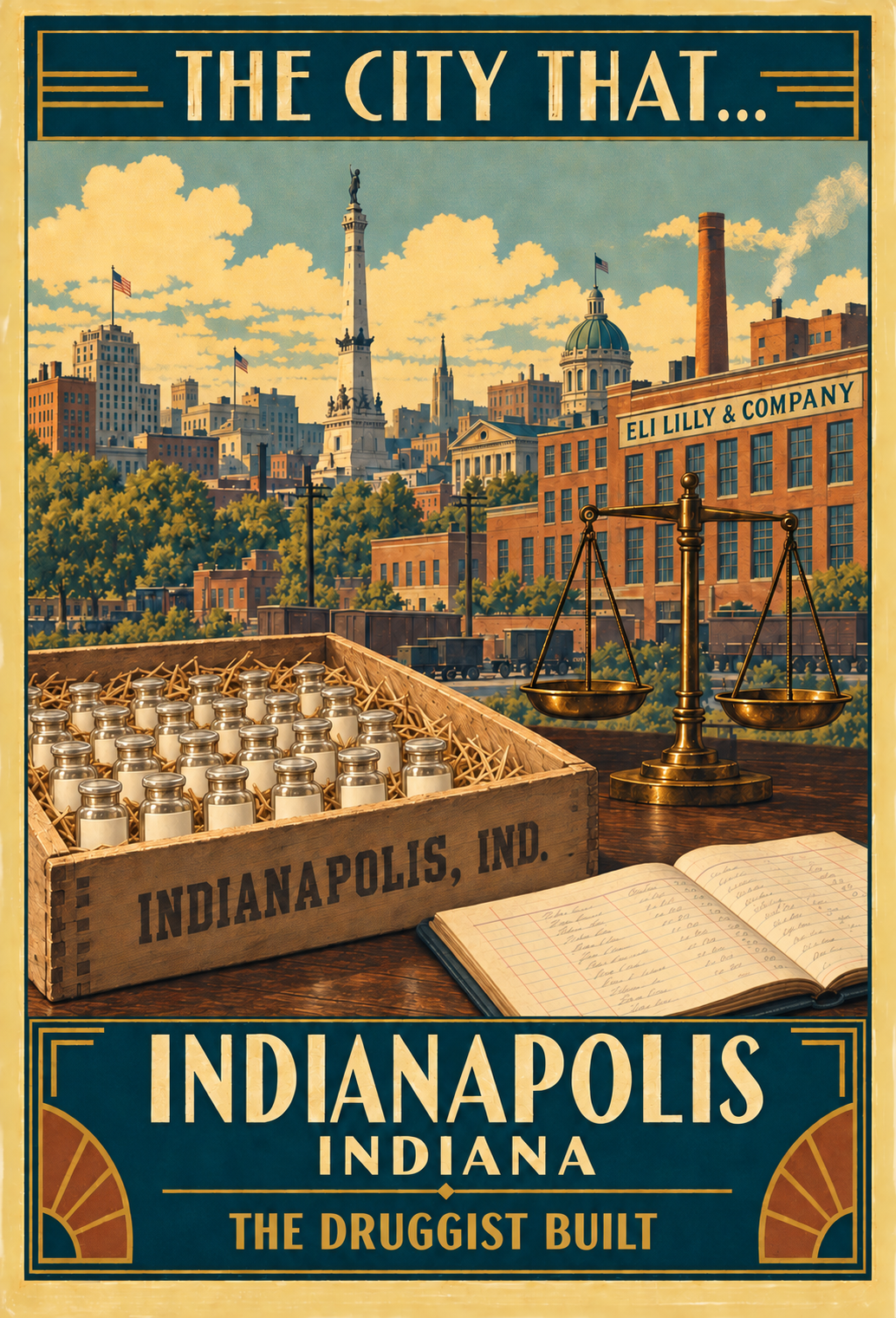
Toronto could not make enough of it. A university laboratory is a poor factory. In late May 1922 the university reached an agreement with Eli Lilly and Company of Indianapolis, whose research director, George Clowes, had been pressing Macleod for months. Lilly received an exclusive license in the United States for one experimental year. Lilly’s chemists improved the process, and by early 1923 the company was turning out insulin in quantity. It sold more than a million dollars of the drug in its first year on the market.
Banting and Macleod, the two physicians, were reluctant to patent anything. The ethics of the profession held that a doctor did not patent a treatment. Collip, the chemist, had considered one. Their hand was forced when they learned that a patent taken out by someone else could interfere with their work, or shut it down. The reasoning they settled on was defensive. Once the method was published, anyone could make the extract, and with the patent held by the university, no one could secure a profitable monopoly.
The assignment is dated December 19, 1922, and was recorded with the Canadian Patent Office in January 1923. Banting, Best, and Collip each signed his rights over to the Governors of the University of Toronto. Each received one dollar.
The sentence that usually travels with that dollar, the line about insulin belonging to the world, has not been found in anything from his own time. Researchers who went looking traced it to a children’s biography published in 1959, eighteen years after he died. He may well have believed it. He is not on record saying it.
The university borrowed its model from the University of Minnesota, which had used a patent to control the manufacture of thyroxine. What Toronto added was reach. It took the patent out in twenty-five countries and set up an Insulin Committee to administer it in the public interest. The committee ran a small laboratory to test the insulin that licensed firms produced, because a bad batch could kill. It charged a royalty of five percent. The stated purpose was to control the quality of a dangerous drug and to keep any one firm from cornering it. Between 1923 and 1967 those royalties brought the university some eight million Canadian dollars for research. Even then the arrangement was fought over. There were men who thought a university had no business taking royalties at all.
When did Lilly’s monopoly end? That depends on which monopoly is meant. In the archival study of the insulin patents by the historians Maurice Cassier and Christiane Sinding, the contract was exclusive for one experimental year, and in March 1923 Toronto refused Lilly’s request to keep that exclusivity until January 1924. The Food and Drug Administration’s history has limited distribution continuing into the fall of 1923. A centennial review by two Toronto diabetes researchers puts Lilly’s exclusive American rights at 1924. My reading is that the contract ran out in 1923 and the market took longer to open, because other licensed firms needed time to learn to make the drug. That is a reading. The documents do not settle it.
Leonard Thompson lived another thirteen years. He died in 1935, of pneumonia, still a young man.
Early insulin was hard to live on. The injections were large, typically three to seven milliliters and sometimes more. They raised abscesses. Blood sugar crashed low and swung high, and control was poor. Over the years that poor control raised the risk of failing kidneys, amputation, and blindness, complications that far more patients now lived long enough to meet.
The anti-vivisection societies, which had fought the dog experiments for decades, argued that insulin had been bought with animals for nothing, since careful diet already controlled diabetes and the new drug was only a treatment. They were wrong about the diet. Their other point, that insulin treated the disease without curing it, the physicians of the day made themselves.
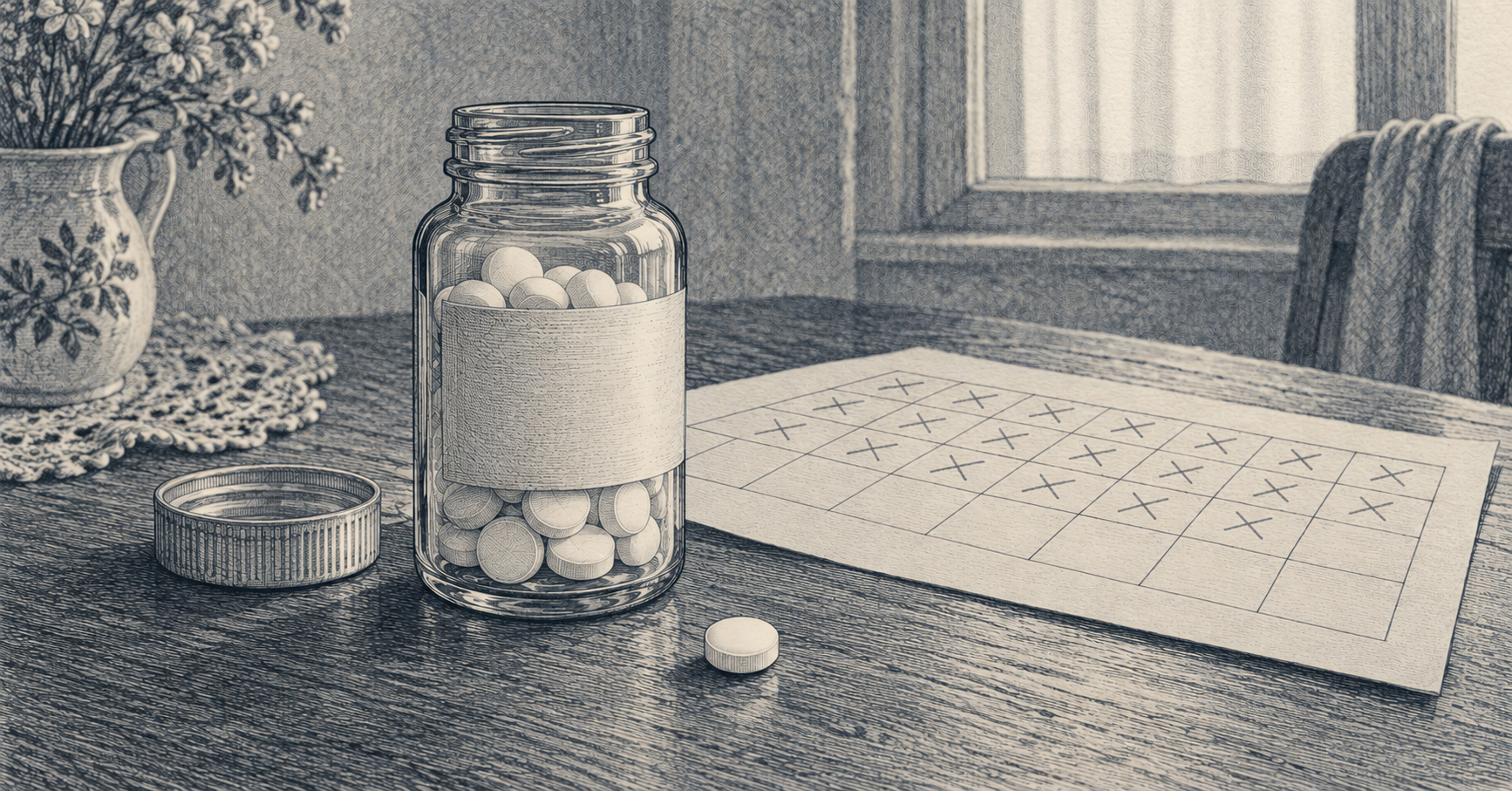
The child who would have died in a year now lived for decades, and every one of those days began the same way. The dose that had worked yesterday had to be found, and paid for, and given again today.
In Canada, for a long time, the price went the other way. Connaught Laboratories, the university’s own producer, cut its insulin prices steadily from 1922 to 1942, held them level until 1967, and then began to raise them.
The drug kept changing. Longer-acting insulins arrived in the 1930s and 1940s, and new formulations followed through the 1950s. Purer insulins came next, and in the early 1980s human insulin made by engineered bacteria. Most of these changes made the drug safer or easier to live with, and many carried new patents. Historians of the drug argue that this steady stream of protected improvements is part of why a century-old medicine went so long without a cheap generic.
When Lilly launched its fast-acting Humalog in 1996, a vial listed at twenty-one dollars. By 2017 the list price was $274.70. Rebates paid behind the counter took part of that back. Even so, from 2012 to 2014, after rebates, net prices for long-acting insulins rose more than twenty percent a year. A RAND analysis for the federal government found that in 2018, on a like-for-like basis, American manufacturer prices for insulin before rebates ran about eight times those across thirty-two other OECD countries. A later RAND estimate, after allowing for rebates and discounts, still put American prices at more than twice the level elsewhere.
In 2017 a young restaurant manager in Minnesota named Alec Smith turned twenty-six and aged off his mother’s health insurance. His job carried no benefits. His insulin and supplies, uninsured, came to about $1,300 a month. He began stretching what he had. His mother has said he lasted about four and a half days.
The easy villain is the drug company, and the record makes that harder than it looks. A study of thirty-two insulin products found that between 2014 and 2018 list prices rose about forty percent while the net price the manufacturers actually received, after rebates, fell about thirty-one percent. By the study’s estimates, the manufacturers’ share of every hundred dollars of net spending on insulin fell from about seventy to about forty-seven. The rest went to everyone in between, the health plans, wholesalers, pharmacies, and pharmacy benefit managers, and the shares of the pharmacies and the benefit managers grew fastest. Total net spending per unit of insulin rose about three percent over those years. A Senate Finance Committee investigation found both halves of the machine at work: manufacturers raising list prices aggressively, often in step with one another, and benefit managers whose demands for larger rebates rewarded the high prices.
In March 2023, Lilly announced a seventy percent cut to the list price of Humalog, to take effect late that year. Novo Nordisk and Sanofi announced their own cuts the same month. Medicare’s drug plans had capped each covered insulin at thirty-five dollars for a month’s supply that January. By 2025, the average paid in cash or through assistance programs for a month’s supply had fallen to about seventy-one dollars, from about two hundred thirteen in 2018.
In 2021, before most of the cuts, about one in six American adults who use insulin rationed it to save money, some 1.3 million people. At the Yale Diabetes Center, one patient in four reported rationing for cost in 2017. In 2024, after the caps and the cuts, it was still one in four. That is one clinic, and a national count after the cuts would say more.
Novo Nordisk announced in March 2023 that it would cut the price of its long-acting Levemir by sixty-five percent, starting January 1, 2024. In November 2023, before the cut took effect, the company said it would discontinue Levemir in the United States, citing global manufacturing constraints. Three senators wrote that they were alarmed.
In January 2026 California began selling its own insulin, under a state label, at fifty-five dollars for a box of five pens. Seven months later the state had distributed more than 120,000 boxes. At a Walgreens in San Francisco, a pharmacist kept two on her shelf. She had not yet dispensed one. She said it was good to have if a patient came in without insurance.
What endured from that ward in Toronto is a disease that no longer kills on schedule, and a drug that has to be bought again every month by people whose lives depend on it.
It cannot be undone, and most of us would not undo it.
That is the bargain medicine made.
Insulin was given to one child at a time, every morning, for the rest of a life.
The next great campaign would ask a whole country to roll up its children’s sleeves at once, on the strength of a promise.
* * * * *
CHARLES CRANSTON JETT is an author, civic educator, and Professional Certified Coach based in Chicago. A graduate of the U.S. Naval Academy (Class of 1964) and Harvard Business School, he served during the Cold War as an officer aboard nuclear submarines. He is the author of six books, including Super Nuke!, hosts four podcasts, and writes across his Critical Skills Blog platform on history, leadership, and the health of the American republic. In his writing he employs AI tools in a limited, supporting role for research, occasional image creation, and editing, while the prose and judgment remain entirely his own. He and his wife, Dr. Nancy Church, live and co-host the Chicago Salons at Water Tower Residences.


Leave a Reply